DevSecOps was supposed to make security move at the speed of engineering. Instead, most teams running traditional Dynamic Application Security Testing (DAST) tools have hit a wall: scanners that flood ticket queues with false positives, can't keep up with daily deploys, and produce findings developers don't trust enough to act on.
If your security team spends more time triaging scanner noise than fixing real vulnerabilities, the tool isn't broken — the model is.
The Problem With Traditional DAST
1. False positives erode trust
Legacy DAST tools are built to find potential issues, not exploitable ones. They flag anything that resembles a vulnerability pattern, regardless of whether it's actually reachable or exploitable in the running application. The result: security teams forward hundreds of findings to engineering, and engineering learns — fairly quickly — that most of them aren't real. Once that trust breaks down, even valid critical findings get deprioritized.
2. Scan cycles don't match release cycles
Traditional DAST was designed for quarterly or monthly security reviews, not for teams shipping multiple times a day. Scans that take hours to configure and run create a bottleneck that DevSecOps pipelines simply route around — usually by skipping security testing on all but the biggest releases.
3. Manual configuration doesn't scale
Most legacy scanners require security engineers to hand-configure auth flows, API definitions, and crawl paths for every application. As API surfaces grow — REST, GraphQL, OpenAPI, internal microservices — this manual overhead scales linearly with attack surface, and teams simply run out of hours in the week.
4. Findings lack business context
A vulnerability sitting behind three layers of authentication and network segmentation is not the same risk as one exposed on a public-facing login page. Traditional DAST tools rarely distinguish between "accessible" and "exploitable," so every finding gets treated with the same urgency — which in practice means none of them do.
5. Coverage gaps around modern architectures
APIs, AI agents, and MCP (Model Context Protocol) servers are becoming core parts of the modern application stack, but most legacy DAST platforms were built for traditional web apps and haven't caught up. That leaves a growing, largely undefended attack surface.
What Autonomous DAST Fixes
Autonomous DAST platforms are built around a different premise: security testing should run continuously, validate findings before they ever reach a human, and prioritize based on real exploitability — not pattern-matching.
Exploit-backed validation, not guesswork
Instead of flagging theoretical issues, autonomous DAST platforms attempt to validate exploitability directly — chaining vulnerabilities the way an actual attacker would. A finding that survives this validation step is a finding worth a developer's time.
Reachability-based prioritization
The right framework asks two questions: is this vulnerability accessible, and is it exploitable? Autonomous platforms that separate these two conditions give security teams a prioritization model that maps to actual business risk, not scanner defaults.
Continuous, unattended testing
Rather than scheduled scans that require manual kickoff, autonomous DAST runs 24×7 in the background — authenticated and unauthenticated — and integrates directly into CI/CD pipelines (Jenkins, GitHub, GitLab, Bitbucket, Azure DevOps, CircleCI) so testing happens on every build, not once a quarter.
Full coverage of modern surfaces
Modern autonomous platforms extend beyond traditional web apps to REST, GraphQL, and OpenAPI-based APIs, with broken access control and authorization flaw detection built in — and the strongest ones are already expanding coverage toward AI agents and MCP server security, an area most legacy scanners haven't touched.
Remediation teams can actually use
Curated, stack-specific remediation guidance, automated playbooks, and remediation campaigns turn a finding into a fix — not just another line item in a backlog.
The Measurable Difference
Organizations that move from traditional to autonomous DAST typically see:
- 95% fewer false positives
- 85% faster remediation
- 89% of critical vulnerabilities resolved within SLA
- $1.2M in average annual savings per deployment
- 80x ROI
These aren't incremental improvements — they reflect a fundamentally different relationship between security and engineering teams. When findings are trustworthy and prioritized correctly, security stops being a gate and starts being a partner.
How ThreatSpy Applies This
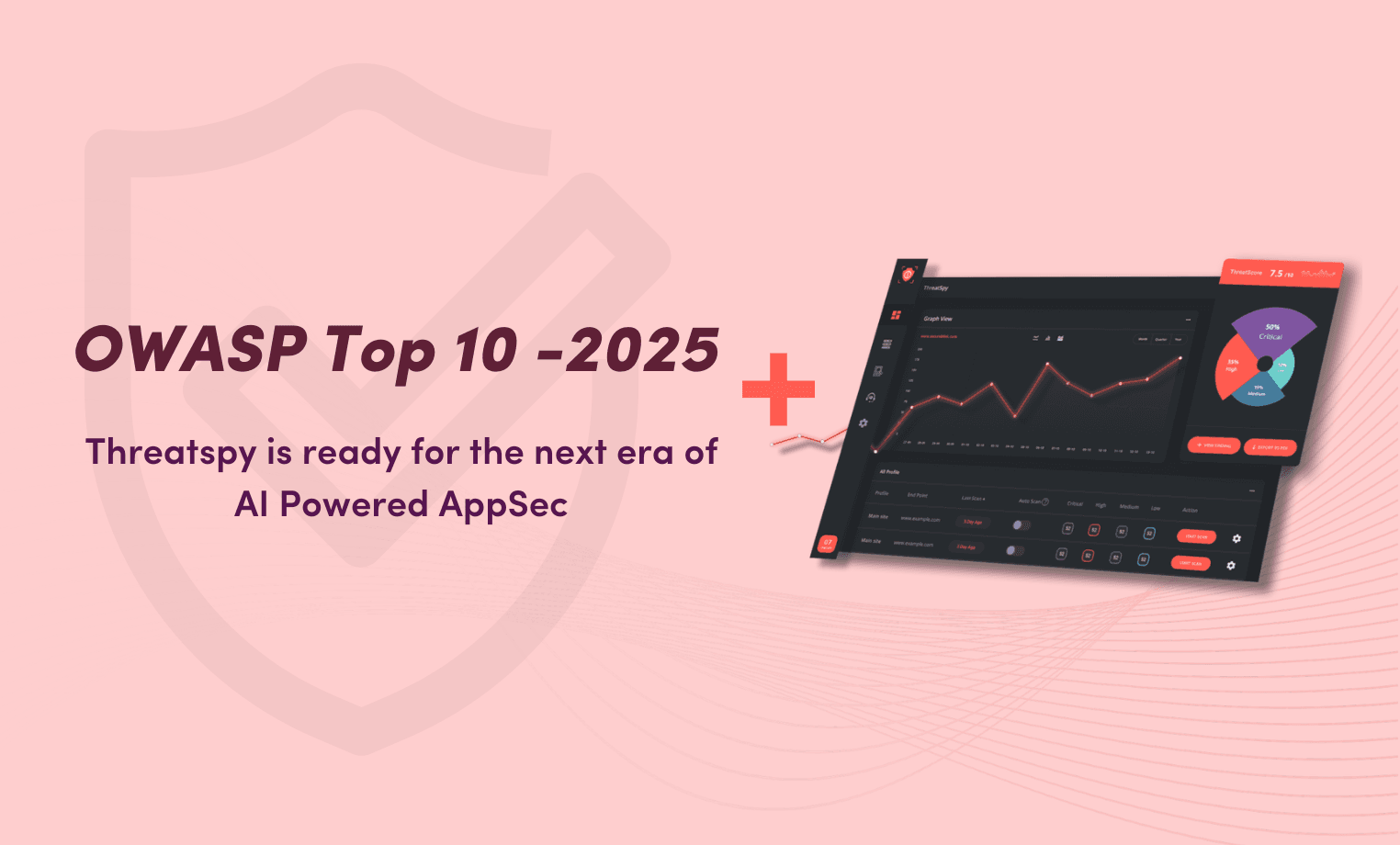
ThreatSpy, an Autonomous Application and API Security Platform (DAST), is built around the same principle: findings should be validated, not just flagged. It runs continuous, autonomous DAST and API security testing across REST, GraphQL, and OpenAPI surfaces, with exploit-backed validation separating what's merely accessible from what's actually exploitable — so security teams triage a fraction of the noise legacy scanners produce.
Remediation is where a lot of that time savings compounds. Rather than handing engineering a generic finding, ThreatSpy pairs each one with curated, stack-specific remediation guidance, automated playbooks, and remediation campaigns — cutting the back-and-forth that normally stretches Mean Time to Remediate (MTTR) and turning a finding into a fix a developer can act on immediately.
The Bottom Line
Traditional DAST isn't failing because security teams are doing something wrong — it's failing because the model it was built on (periodic scans, unvalidated findings, manual configuration) doesn't match how software gets built and shipped today. Autonomous DAST closes that gap by validating what's real, prioritizing what matters, and running continuously enough to keep pace with modern release velocity.
Ready to see what exploit-validated, continuous DAST looks like for your stack? [[Request a ThreatSpy demo]](https://www.secureblink.com/contact-us) or explore how ThreatSpy compares to traditional scanners for your specific environment.