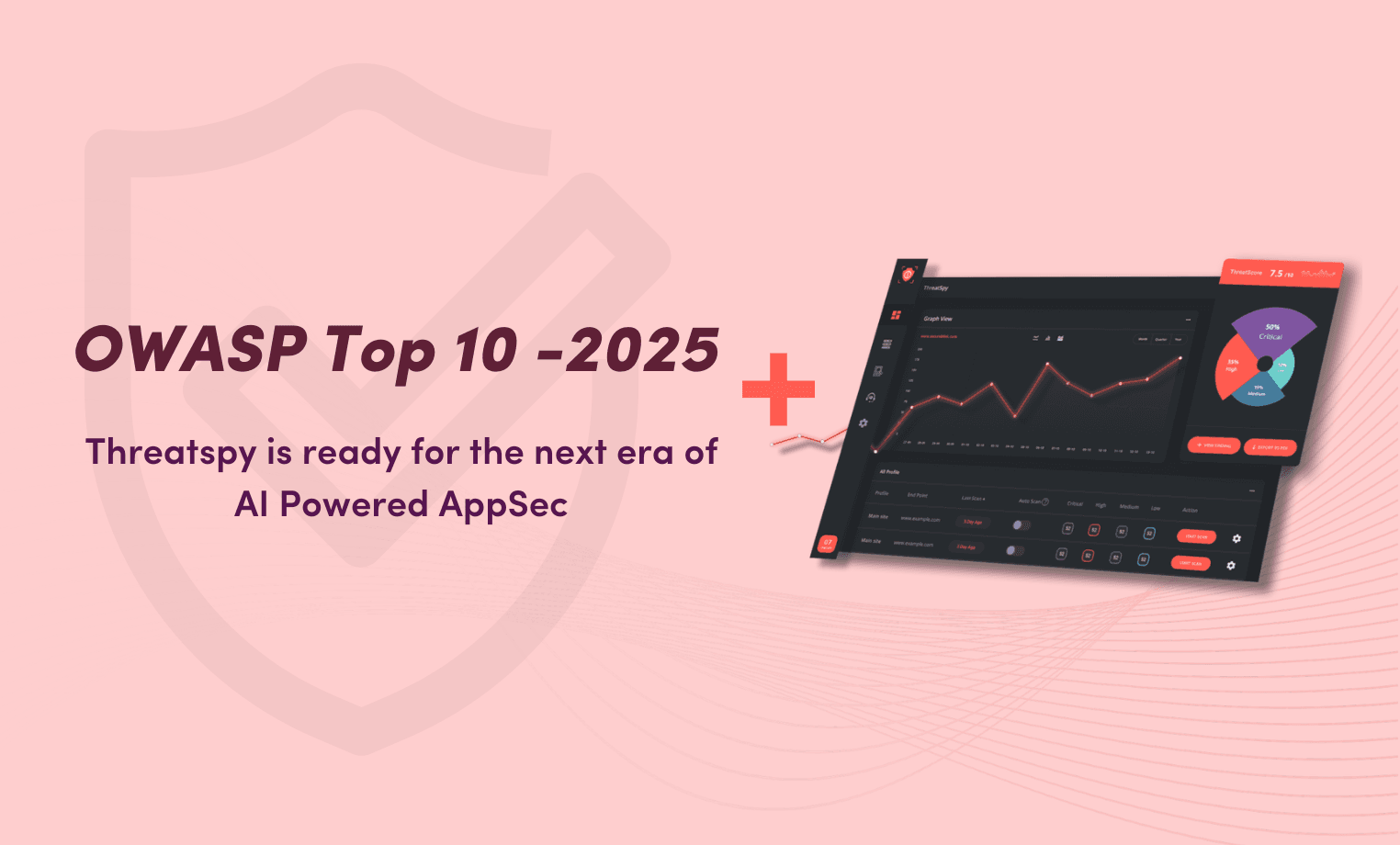
The OWASP Top 10 2025 has arrived — and with it, a new era in how organizations think about web application and API security.
Compared to the 2021 edition, this update reflects the realities of a hyperconnected, API-driven, and AI-enabled world. From business logic flaws to cloud misconfigurations and API authorization gaps, the OWASP 2025 list underscores one truth: security must evolve as fast as code does.
From 2021 to 2025 – What’s New and Why It Matters
The 2021 list focused on core web vulnerabilities like Broken Access Control, Cryptographic Failures, and Insecure Design. The 2025 update expands this scope significantly, introducing API-centric, authorization-driven, and AI-influenced risk categories that map directly to today’s development practices.
1. OWASP Top 10 Evolution: 2021 vs 2025
| 2021 Category | 2025 Evolution | Key Shift |
|---|
| Broken Access Control | Authorization & Contextual Access Flaws | Expanded to include complex API-level authorization chains |
| Cryptographic Failures | Data Protection & Secrets Exposure | Focuses on token leaks, weak key storage, and improper encryption |
| Injection | Injection & Prompt Injection | Adds coverage for API queries and AI prompt injection attacks |
| Insecure Design | Design & Logic Flaws | Emphasizes business logic abuse and insecure workflow handling |
| Security Misconfiguration | Cloud & Configuration Drift | Extends to IaC and containerized cloud setups |
| Vulnerable Components |
How ThreatSpy Proactively Detects OWASP 2025 Vulnerabilities
ThreatSpy, Secure Blink’s AI-powered, developer-first Application Security Management Platform, is purpose-built to handle these evolving challenges. Unlike traditional scanners that focus on post-deployment findings, ThreatSpy enables proactive detection and continuous validation throughout the SDLC.
1. Authorization & Access Flaws
ThreatSpy performs contextual scans to uncover Broken Object Level Authorization (BOLA), IDOR, and privilege escalation vulnerabilities across both web applications and APIs.
✅ Detects hidden authorization logic issues early in development.
2. Data Protection & Secrets Exposure
Monitors configuration and runtime parameters for exposed API keys, tokens, or credentials in source or staging environments.
✅ Prevents inadvertent data and secret leaks across environments.
3. Injection & Prompt Injection
Uses advanced fuzzing and payload mutation to identify SQL, NoSQL, Command, and GraphQL injections—and flags prompt injection attempts targeting AI endpoints.
✅ Detects injection variants before production rollout.
4. Design & Logic Flaws
ThreatSpy’s Logic-Flow Engine models application workflows to detect forced browsing, workflow bypasses, and data flow manipulation issues.
✅ Catches business logic vulnerabilities missed by static tools.
5. Cloud & Configuration Drift
Scans for security misconfigurations, missing headers, open ports, and unsafe defaults in cloud-native and containerized environments.
✅ Ensures consistency between infrastructure and application configurations.
6. Component Exposure
Identifies outdated frameworks, libraries, and dependencies with known vulnerabilities or unsafe configurations — without requiring SBOM integration.
✅ Keeps web stacks aligned with secure component baselines.
7. Identity & Session Weaknesses
Validates token expiration, session handling, and multi-factor workflows to ensure session integrity.
✅ Prevents authentication bypasses and replay attacks.
8. Pipeline & Integrity Risks
Monitors CI/CD environments for unsafe build triggers, secret leakage, and unvalidated dependency pulls.
✅ Protects against compromised builds and injected scripts.
9. Detection & Response Gaps
ThreatSpy integrates seamlessly with SIEM and DevOps alerting systems to provide actionable insights and runtime visibility.
✅ Reduces mean time to detect (MTTD) and mean time to remediate (MTTR).
10. Cloud & Data Pipeline Exposures
Detects SSRF-like patterns, unsafe metadata calls, and open data sync endpoints in web and API environments.
✅ Prevents data leakage and lateral movement through cloud pipelines.
Security by Design — Built In, Not Bolted On
ThreatSpy isn’t just another testing tool — it’s a security-by-design enabler. It integrates seamlessly into your development and deployment pipelines, continuously validating code, APIs, and configurations at every stage. By shifting security left and leveraging AI for context-driven insights, ThreatSpy helps teams fix faster, deploy safer, and scale securely.
Scan Your Web App Against the OWASP Top 10 (2025)
The OWASP 2025 update sets the new standard — and ThreatSpy is already there.
If you want to evaluate how your web applications stand against the latest OWASP Top 10 (2025) vulnerabilities, you can start today.
👉 Sign up for your 14-day free trial and experience how ThreatSpy makes AppSec effortless, intelligent, and proactive for every modern team.
ThreatSpy — Making AppSec effortless and intelligent for every modern team.